Mr. Aarseth, the author of this paper, decipher the meaning of “ergodic” in the first few sessions, describing the problems to interpret ergodic art, and tried to explicate the architecture of computer games like Doom and programs like The Speaking Clock with existing theories.
No intent to be obdurate. But it is inexplicable and impenetrable to attempt to explain new matters like computer games with slick existing understanding and innumerable amount of profound theories and academic vocabularies. Probably that game designers themselves feel it eerie to read these doctoral thesis which are analyzing their own games with obsolete philosophies because none of those “ergodic discourse”, “relationship between narrative and ergodic”, “three temporal levels of time”, or any other stale hermeneutic interpretations were applied in making those popular computer games. People like Mr. Aarseth are completing the long paper for his own degree, but have no benefit driving computer games into a new era, like numberless game programmers and designers do.
And then I asked myself, what is the purpose of spending two hours reading this long essay? Yeah of course those arduous academic vocabularies is the aporia of his essay (I‘m using his theory), and the epiphany is that I tried to interpret every words with the dictionary, finally evoked another great leap of my English vocabulary comprehension. That is one benefit, sadly, I gotta admit.
Another ultimate purpose could be to let us understanding the importance of creating a player dominated game-play environment, which everyone can create their own maps and scenarios, sharing them on the internet and play together.
However we (digital generation, which hold a game-boy since we are six) all recognized this kind of game-play since the very early age of PC game. I created scenarios for Age of Empire II and I was a star on the “Zone”, even some fans opened websites interrupting the strategies and walkthroughs of my maps. Counter-strike, Warcraft, Sims, Sim-city, even Civilization are paradise for players who like to create things and share them with others. In my opinion, games which last longest provide the freedom to players creating new items and new worlds. So, the element of player dominated game-world development is not innovative and admiring anymore, but essential for many successful games in the 00’s world.
So, thanks, Mr. Aarseth, you enhanced my English vocabulary storage. For other purposes, your essay is too old to meet the new era.
2011年2月19日 星期六

2011年2月14日 星期一
How can Matrix be achieved

I wrote this on train in a hour, so, don't blame me on grammatical or informational faults lol
How can Matrix be achieved
I truly believe that the final fantasy of all computer game designers is to achieve "Matrix", a total reality mimetic virtual environment.
But the fact is, in half a century, it can hardly be done.
Let us elaborate the technical requirement of Matrix.
1. Perfectness of 3D graphic appearance
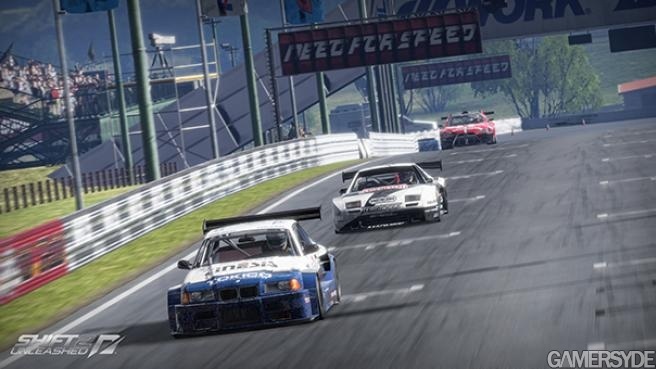
Gotta admit that in the last two decades, performance of 3D graphic has improved astonishing. The comparison can be easily done when you compare NFS (Need for Speed) with NFS 14. No one can imagine such a promotion in such a short period. Maybe players who are always chasing for new games are not stunned. It is anyhow the greatest technical leap in human history.
I believe an almost perfect virtual reality can be achieved in 10 years. Take a look on Dirt 3 (which will be published in March), the car model, the trail, the smoke are almost real. Color is a bit different, lighting is not perfect (comparing to the reality), but you almost feel like you are riding a real rally car with 1600x1200 resolution.
2. Input graphic signal into human brain
The second step of Matrix. I am neither a doctor nor a scientist. But it seems to be quite a scientific defiantness when I take a search of "electronic signal, input, brain, image" on Google.
Yeah, I found this.
http://computer.howstuffworks.com/brain-computer-interface.htm/printable
But graphic signal is just the first step. In Matrix, you can smell, you can feel. How can the program emit the smell of perfume by stimulating some spots in our brain, it is the question.
3. Reading signal from brain
The last step of Matrix is to read those micro-electronic signals among the nerves in our brain. When we walk, cerebral cortex (where all thinking happens) emit a signal to our leg. The simple way is to intercept the right signal. Prosthetics shows the possibility. But before we can distinguish every signal in our brain, envision is still envision.
2011年2月13日 星期日
Review to “From participation to interaction
Review to “From participation to interaction” by Söke Dinkla
Yau Chi On
13/02/2010
The essay simply told us the history of interactive art-work. From the beginning, which audiences participate in performance art, to a very basic interactive art-work, asking visitors using light to illuminate the art-work on their own, and then to apply electronic sensor, cameras to build up an interactive visual effect. Artists keep looking for new ways to narrow the distance between art-work and the visitors.
The essay has nothing attracted or interested me to penetrate with. Maybe we modern people have seen too many stunning interactive things, so those art-works like “Participation TV I” looks a little bit boring and stupid to us. Yeah, of course this is an idea of breakthrough at that moment, so the purpose of illumination and innovation is undeniable.
Nowadays, “Interactive” is anyhow conversant. We deal with lots of electronic devices every day, from cell-phone to soda machine, from computer to TV remote. On the other hand, computer makes it incredibly easy to create an interactive art. Any art student can use software like Flash, Arduino, and hardware like web-cam and microphone to develop his own interactive art-work in a few hours.
Advance of technology make interactive art-work too easy to achieve. But we should not forget how those predecessor artists use mechanical sensor and cathode television to show us the idea of interactivity between human and machine.
Yau Chi On
13/02/2010
The essay simply told us the history of interactive art-work. From the beginning, which audiences participate in performance art, to a very basic interactive art-work, asking visitors using light to illuminate the art-work on their own, and then to apply electronic sensor, cameras to build up an interactive visual effect. Artists keep looking for new ways to narrow the distance between art-work and the visitors.
The essay has nothing attracted or interested me to penetrate with. Maybe we modern people have seen too many stunning interactive things, so those art-works like “Participation TV I” looks a little bit boring and stupid to us. Yeah, of course this is an idea of breakthrough at that moment, so the purpose of illumination and innovation is undeniable.
Nowadays, “Interactive” is anyhow conversant. We deal with lots of electronic devices every day, from cell-phone to soda machine, from computer to TV remote. On the other hand, computer makes it incredibly easy to create an interactive art. Any art student can use software like Flash, Arduino, and hardware like web-cam and microphone to develop his own interactive art-work in a few hours.
Advance of technology make interactive art-work too easy to achieve. But we should not forget how those predecessor artists use mechanical sensor and cathode television to show us the idea of interactivity between human and machine.
What make dirt 2 a masterpiece

Today, I would like to compare the interface of two latest racing games. One is a masterpiece, and one is bullshit. Yeah, the masterpiece is Colin Mcrae Dirt 2. It is truly a masterpiece.
Yeah, let's begin with the game starting menu. It doesn't have a menu.
What you see when entering the game is already the virtual reality. You are a racer traveling all over the world joining different kind of rally races.
I gotta say, it is fucking brilliant. I mean, one of the most important element of a game is the atmosphere. Everybody wanna become a racer, everybody wanna travel all over the world. So the interface just simply throw those menus away, and give us the feeling of becoming a real racer. Driving my little van from Europe to Africa.
So, how about the bullshit one? Yeah, its name is WRC 2011. It was published in last October, 1 year later than Dirt 2. But still, it is a crap. Look at the menu, still stay at the era of PS2. When you click up arrow or down arrow to select options.
So what about the racing interface? Well, besides interface, I gotta say WRC 2011's graphic is a disaster. Someone should be fired for the poor graphic.
And the graphic of Dirt 2?
Here's one of my dirt 2 video on youtube.
http://www.youtube.com/watch?v=RGZP2PJpP3A
訂閱:
文章 (Atom)